Showing posts with label Human Rights. Show all posts

Saturday, 4 April 2015

Tri- Lateral Talks: When Bi- Lateral Just A'int Enough

Pakistan emphasizes that talks between them and India must be maintained to not only solve the issues in Kashmir but for the development of the entire South Asia region. However, this was followed by a request to bring in a third party to form the trilateral talks with parties representing Pakistan, India and the people of Kashmir.

Pakistan has said that the Kashmiri people will be the most affected by the outcome of the talks and therefore need to be privy to the talks themselves. This statement has largely been supported by the Kashmiri people and has shifted the baton of power towards Pakistan in the minds of the people.
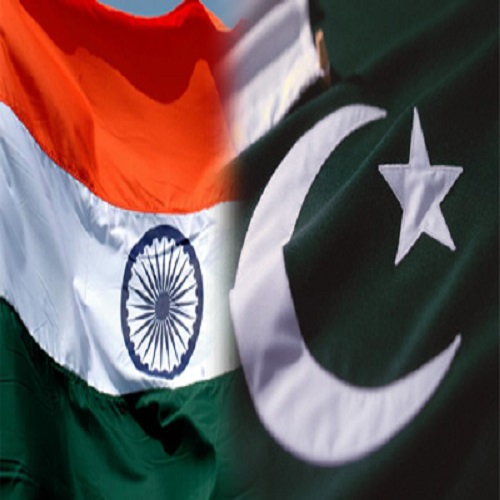
Source: dnaindia.com
India has no concrete statement regarding this issue and this has left a taste of uncertainty in Kashmir.  The Kashmiris who support India now wonder whether they made the right choice as it makes sense to involve the Kashmir people in the talks. Since Kashmir welfare is the top priority, people believe that India should let a third party join the talks and ensure that the discussions are steered in the right direction.

One of the reasons India could be forestalling is because this could mean complicating and undermining the position that India is in.  It is widely believed that India was on the verge of completing the talks that provide India a favorable outcome.  Pakistan, seeing no way out, decided that involving a third party would not only prolong the talks but change the entire dynamics of it, effectively starting the talks afresh.

This would hinder the welfare and growth that Kashmir is currently experiencing and also prolong any legislation that the people are waiting for as the presence of these talks would provide obstacles to the smooth functioning and development of Kashmir.

The Kashmir Conflict: A Historical Context

Kashmir is a matter of conflict between India and Pakistan before independence. It has lead to wars between these countries.  They have fought three wars for Kashmir, which includes the wars of 1947, 1965 & 1999. India is claiming the entire state of Jammu and Kashmir including Kashmir valley, Ladakh and most of Jammu. Pakistan has approx. 37% of Kashmir, known as ‘Azad Kashmir’.

In 1947, British rule in India ended with creation of a new country, Pakistan (earlier, part of India). All the states were free to choose either to join India or Pakistan or to remain independent. At that time, Jammu and Kashmir had majority of Muslim population ruled by Hindu King, Maharaja Hari Singh. He chose to join India. Muhammad Ali Jinnah, leader of the newly created Pakistan wanted Kashmir as it was Muslim dominated. The king did not decide anything for months and Pakistan sent a troop of raiders to force the king to join. The king fled to India and agreed to join India in return for protecting Kashmir from Pakistanis. Soon, India & Pakistan were involved in the war in 1947 & Pakistanis were pushed back.

Kashmir belongs to India as the last king had signed the instrument of accession to join India. Its history and culture is similar to the India.

Pakistanis has encouraged separatists for 5 decades and now, China has involved to be in aid of Pakistan.

Essentially, it is a two party conflict (between India & Pakistan) where external parties are quite interested.

Kashmir - My Perception

Kashmir denotes a larger area that includes Indian administered state of Jammu and Kashmir (consists of Jammu, the Kashmir valley and Ladakh), the Pakistan-administered territories of Azad Kashmir and the Chinese-administered regions of Aksai Chin and the Trans-Karakoram Tract.

The Kashmir dispute is a major territorial conflict between India and Pakistan that dates back to 1947.
The question is: To whom does Kashmir belong: India or Pakistan?

Well, it depends on who you ask.

As an Indian, I would say that Kashmir was not a part of British India and was an independent province under British suzerainty. Partition does not govern where Kashmir belongs. Accession is a matter to be decided by each Princely state. In 1948, when Pakistan attempted to annex Kashmir, the Hindu ruler of Kashmir signed up to accede with India to get India’s protection. He was supported by Sheikh Abdullah, the Muslim leader of Kashmir’s popular political party.

But if you ask any Kashmiri, he/she would say that the future of Kashmir should be determined by Kashmiris. Not by India, not by Pakistan. Some may want to remain in India, some may want to join Pakistan or some may want to be independent.

Though in reality,

Both India and Pakistan are nuclear powers. It is not easy for political super powers to adjudicate on this matter and force either India or Pakistan to do what the political powers think is fair.
Public opinion in both India and Pakistan are so entrenched that any politician who cedes Kashmir away will never get re-elected. Kashmir can be taken away only by force. Such force against a nuclear power is not easy; not available.

Therefore, the LOC is likely to remain a de- facto international border splitting Kashmir unfortunately into two: one under Pakistan control, one under India control.

Such a beautiful place and such a wonderful people caught in such a milieu of politics!

- Mosam Acharya

This is an opinion piece written by the author who has been credited, and the views that are expressed are exclusively hers.

Kashmir: Our Problem?

The Kashmir issue is many sided and has more layers than people would care to admit, since not admitting to the complexity of a problem is a lot easier than respecting the multi- varied dimensions of it. As said before, the problem that Kashmir poses to New Delhi is similar to any other counter- insurgency operation that has been undertaken by any government.

In military parlance the term used for a situation that had multiple points of origin and no clear targets, or easily identifiable/ tangible objectives (such as Afghanistan and the International NATO forces) was called a "Cluster Fuck". Which while apt couldn't be spoken of in the presence of official, so it was abbreviated to CF and then referred to as Charlie Foxtrot. The insurgency threat in the valley is a CF if there every was one.

You have a mostly Hindu peace keeping/ security force that is an almost entirely Muslim area. This split on communal lines need not exist, but the fact that it exists must not be ignored by politico's who have the power to shape the lives of entire families who inhabit the Kashmir valley. The constant threat that a child in the valley is in, can't be easily described.

A riot in progress
Source: http://kashmirinfocus.com
The Indian government has not done a great job at inspiring any sort of trust in the people. In addition the politicization of every issue that the state deals with ensures that the state will continue to be split on communal lines as long as political parties see it fit to do so. A recent example is how the BJP decided it was ethical, or at least alright to start accusing Abdullah and his National Conference of not ensuring that flood victims were rehabilitated and the disaster as a whole was contained.

The Jhelum floods over
Source: ibnlive.in.com
The Assembly election have presented another significant problem. The alliance between the PDP and the BJP seems quite perfect, but if one looks deeper, it seems to be a little counter- intuitive to have an alliance between two parties that are on completely opposite sides of an ideological spectrum. One of the strongest criticism of the UPA I and UPA II was that even though Dr. Singh might have been well meaning, he was curtailed by different factions of his coalition that just refused to co- operate on certain issues. Thus are the perils of a parliamentary system. The PDP and BJP alliance in the state legislature are going to be beleaguered by problems that can't even be imagined, and we didn't even have to wait very long before a comment crediting the Hurriyat for ensuring that elections went off without a hitch ensured that a parliamentary session was interrupted.

There might be any one solution to this problem, in truth there can't be, not when there are so many different factions that are vying for their own version of the promised land, or at least their home. Here is where David Malone again comes to my mind, and like he said, if India bases it's argument on the fact that the people of Kashmir are Indian, then why don't we begin acting like they are?

- Anirudh R.

This is an opinion piece written by the author who has been credited, and the views that are expressed are exclusively his. 

An Eye- Witness Account

Gunfire and deafening blasts were common where I lived. It would be considered a good day if we didn't hear any of those. I remember when I was little; I used to flinch at noises and lived in constant fear of someone causing harm to my mother or me.

As I grew up, I stopped flinching. I got used to the specter that hovered over my head, but my fear grew in other directions. I no longer feared just for my mother, but for my friends, their brother and sisters and their families. The militants and the Indian army have been fighting for a very long time. Both say that they are fighting for our safety and freedom but neither of them realizes that their fighting is what is robbing us of our safety and freedom.

I never cared to join either side. I didn't see a solution. All I could think of was that I only had the power to wait until one of them destroys the other. Until then, I would keep working and keep my mother fed. I thought this was enough. I hoped it would be. I was walking home when I was caught in a gunfight. I ran for the nearest shelter, which was a burnt car. Then, there was darkness.

I woke up in a hospital and discovered that I could only see through my left eye. They said it was because of a tear gas canister. My mother was hysterical. I was then told of the outrage my injury had caused. The number of people that took to the streets in violent protests. I was angry at first but as time passed, I realized something. On that day, I realized that the side I wanted to pick. On that day, I lost one eye, but I gained a purpose.

- Purnima. Bala

The short tale above has been told with reference to a story that was published in the Washington Post on political and civil dissenters in the Kashmir valley. 


Inshallah, Kashmir: Living Terror

Inshallah, Kashmir: Living Terror is a documentary by Ashvin Kumar. it has everything that inspires hope and desolation. From the sweeping visuals to the desolation of the home, he captures everything that exemplifies the struggle of the Kashmiri people. Often, attention is focused on either the Kashmiri Pandit ethnic conflict, or the separatists of the valley.

The Poster of Inshallah, Kashmir by Ashvin Kumar 
 By weaving together the testimonials of both ex- militants and ordinary citizens who are just searching for their fathers or brothers, a compelling case is made for a softer and more careful hand that the government can wield in the state.

Source: ibnlive.in
Watch the Documentary in Full Here:


The Exodus that Nobody Remembers

January 19 (or 21st by certain accounts) is infamous in India for being remembered as the anniversary of the exodus of the Pandits from their home, the Kashmir valley and also as the anniversary of the only ethnic cleanse in the modern history of the sub- continent. The Pandits who might have numbered anywhere between 15% and 20% at one point of time have slowly been whittled down to about 3,000 odd. Though these numbers are contentious, they tell a striking story of a people whose government has forsaken them.

Many are of the opinion that the reason for the Exodus (which really came to head in the 1990 riots) was Jagmohan (former Governer of J&K) who not many remember very fondly. Though the number of Pandits who have actually been killed by militants is a contentious question (figures range from 200 to 600 plus), the Exodus implies a threat that was felt by the community that was both implicit and explicit.

Rehabilitation has been attempted, as said by Omar Abdullah, former Chief Minister of Jammu and Kashmir, but has so far been fairly unsuccessful. If history has taught us anything, when a community is displaced so absolutely, it is going to take more than a good dental plan to lure them back.

References and Future Reading:

On the steps taken by the government.

Sanjay Tickoo, head of the KPSS and a Kashmiri Pandit.

Author Mridu Rai speaks about the Exodus.

Indian Express Opinion Piece on the Conflict.

Hindu Op- Ed on the Issue.

NDTV on Omar Abdullah and Rehabilitation Efforts.


Human Rights and Kashmir (Indian Army)

The problems that Kashmir poses to the center can be described best as an insurgency issue. The Kashmir valley has become a hot- bed of separatist activity, where ISI sponsored extremists can often find safety in numbers and where the public are often willing to give them sanctuary.

Counter- insurgency operations require rapid response times and more than an adequate amount of secrecy to accomplish successfully. This is the case that is often times made by many security agencies when certain breaches of ethical codes come to light (read: the CIA), but that still leaves the question of how much rope agencies can be given in situations, if they ever can be, in the name of safety.

The complexity of the operations in the valley, where claims differ as to the exact number of separatist organizations and militants that are active at any given time, can be best understood by using the case study of the operations of the United States in Afghanistan. While Iraq was a little more cut and dried in terms of operational complexity, Afghanistan was a mezzanine of differing control nodes and cross- cutting linkages, which made fighting both the Taliban and Al- Qaeda threat increasingly difficult. Another take away from that operation (if it can even be called that) is that the longer the United States and its NATO allies stayed put, the more local resistance they encounter.

The Valley too poses the same kind of threat to the Indian Army. Being a Muslim dominated region, there is opposition to a mostly Hindu, peace keeping force, who have not done much to earn the trust of the locals. It must be remembered here that counter- insurgency is often territory where huge errors in judgement can be made since the stakes are high.